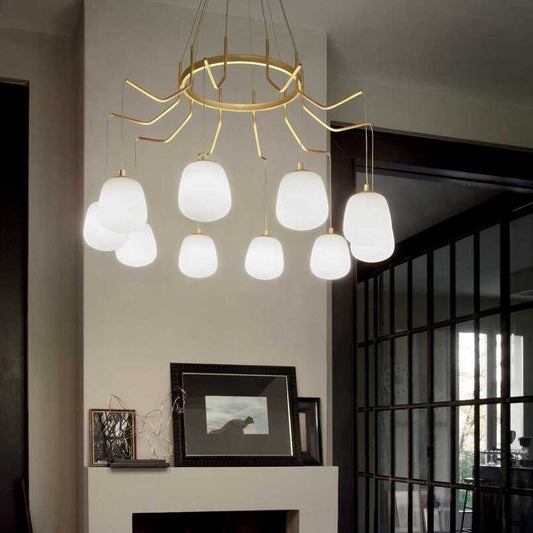
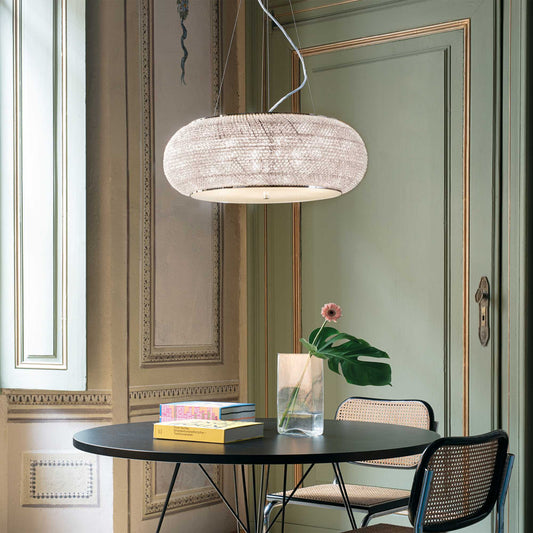
Choosing the right size of chandelier for your space is crucial for achieving a harmonious balance between aesthetics and functionality. A chandelier that's too small might get lost in the room, while one that's too large can overwhelm it. Here’s a guide to help you make the perfect choice for any room in your home.
Understanding the Basics
1. Room Size: The primary factor to consider is the size of the room. A chandelier should complement the room size without overpowering it. Measure the room’s dimensions (length and width), then add those numbers together. The sum, converted to inches, is a good starting point for the diameter of your chandelier. For example, a room that is 3.5 meters by 4.5 meters would suggest a chandelier with a diameter of about 68cm.
2. Ceiling Height: The height of your ceiling affects the chandelier's size and placement. For rooms with standard 2.4-meter ceilings, a chandelier should be 50-60 cm high. For each additional 30cm of ceiling height, add 5-7.5 cm to the chandelier's height. In rooms with very high ceilings or entryways, you can opt for larger, more dramatic chandeliers to fill the vertical space.
Specific Room Considerations
Dining Room: In the dining room, the chandelier is typically centred on your space, which is crucial for achieving a harmonious balance between aesthetics and functionality. A chandelier that's too small might get lost in the room, while one that's too large can overwhelm it over the dining table. The width of the chandelier should be about half to two-thirds the width of the table. It should hang approximately 75-85 cm above the table for a 2.4m ceiling. For higher ceilings, raise the chandelier by an additional 7.5cm for each extra foot of ceiling height.
Living Room: Chandeliers serve as focal points in living rooms, especially those with high ceilings. Ensure that the chandelier is proportionate to the room’s scale and the furniture beneath it. Consider chandeliers between 50 and 90cm in diameter in large living spaces.
Bedrooms: A chandelier in the bedroom adds a touch of elegance. Ensure it’s centred over the bed or in the middle of the room. The chandelier should be proportional to the room size but not overpower the space, typically ranging from 60-90 cm in diameter for an average-sized bedroom.
Entryways and Foyers: A larger chandelier makes a bold statement for grand entryways. The chandelier should be large enough to be seen outside through the windows. Ensure it’s hung at a height that doesn’t interfere with the door opening, usually 2 meters from the floor.
Style and Proportions
1. Room Style: Match the chandelier style with the room’s decor. Traditional rooms might benefit from ornate crystal chandeliers, while modern spaces look fabulous with minimalist designs or industrial chandeliers.
2. Fixture Shape and Structure: Consider the chandelier’s visual weight. A fixture with a dense or intricate design might look heavier and thus should be slightly smaller than a light, airy design.
Practical Tips
1. Test with a Mock-up: Create a mock-up of the chandelier’s size using a balloon or a large piece of cardboard. This helps visualise how the chandelier will fit in the space.
2. Consider Lighting Needs: The chandelier’s primary function is to provide light. Ensure it offers adequate illumination for the room. Sometimes, you might need additional lighting sources, like wall sconces or floor lamps, to complement the chandelier.
3. Professional Guidance: Consult with a lighting professional or interior designer when in doubt. They can provide expert advice tailored to your specific space and needs.
Conclusion
Choosing the right size chandelier balances the room’s dimensions, ceiling height, and overall decor style. By carefully measuring and considering these factors, you can find a chandelier that fits perfectly and enhances your space's beauty and functionality. Remember, a well-chosen chandelier is a striking centrepiece that brings warmth and elegance to any room.
For more information on choosing the right Chandelier for you, see our Kroonluchters Online Buyers Guide